

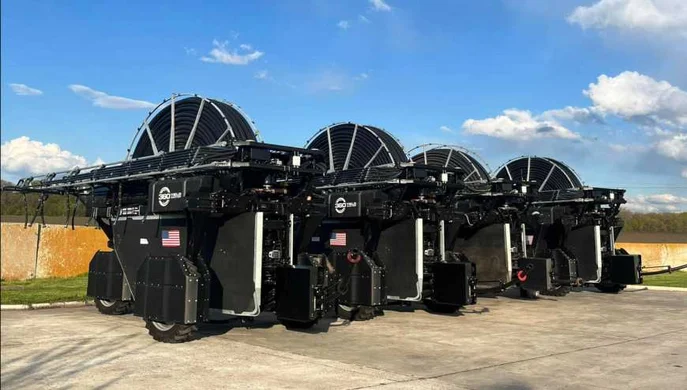
Classic irrigation in Ukraine is up against three walls: it is expensive, there is a shortage of water, and the hassle of installation scares off even those who have the resources. The technology, which has already been tested in the field, bypasses all three — the machine works by itself, pours three times less water and does not require stationary infrastructure on rented plots.
The autonomous 360 RAIN sprinkler works in the field in a completely robotic mode: it moves according to the GPS signal according to a pre-programmed program, without the constant presence of an operator. At one time, it pours about 7 mm of water and serves a plot within 90 hectares, unwinding a hose about 960 meters long.
The development belongs to the American company 360 Yield Center, and the machines are supplied to Ukraine by Agroterra. The largest fleet of such sprinklers in Europe was assembled by the Rost Agro farm — its director Maksym Bernatsky spoke about the technology.
Water goes into the row under the root, and not all over the field.
The key difference from a classic sprinkler system is not autonomy, but the method of water delivery. The machine is equipped with a boom with Y-DROP technology, which delivers water exactly into the row under the roots of the plants, instead of watering the field all over. Thanks to this, water consumption is on average three times lower: a traditional wide-coverage machine gives a rate of 20-25 mm in 4-7 days, while the 360 RAIN works at a rate of 7 mm with a return to the same area in 4-5 days.
Precise water delivery to the root means that the irrigation efficiency is not inferior to circular machines - despite a three times lower discharge rate. The machine moves in rows, accurately repeating the passage of the seeder according to two GPS RTK receivers, and the 18-meter boom covers 24 rows at a time.
The economic side is no less important. According to the manufacturer, such a system costs half as much as drip irrigation and can operate from wells or reservoirs with much less water flow than traditional circular pivots require. This is critical for Ukrainian realities: in many regions, water is simply lacking, and buying a powerful installation without a power source is a waste of money.
Another argument is leased shares. No one wants to lay a stationary irrigation network on land, part of which may pass to another tenant in a year. A mobile autonomous machine does not have this problem: it is not tied to a specific field by stationary infrastructure.
Based on materials from: AgroPortal, GrowHow, AgroTimes